
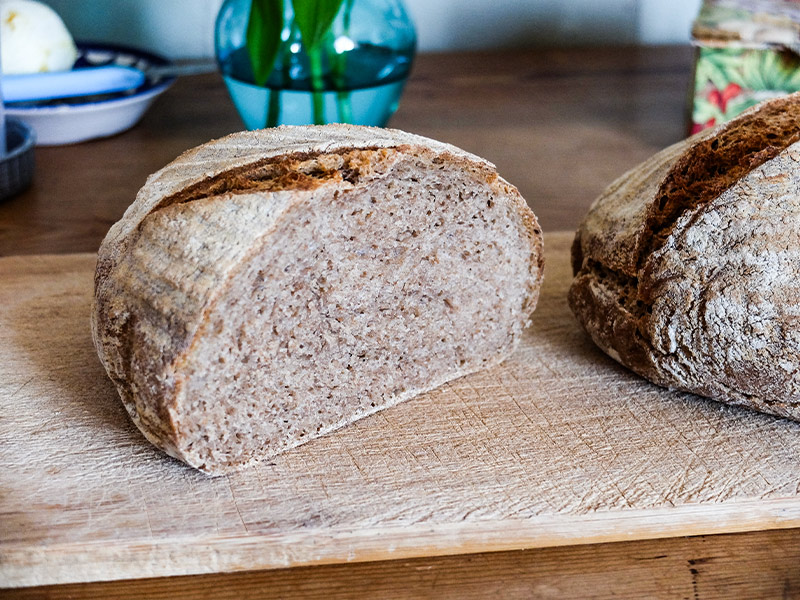
Why Our Sourdough Is Different
What we teach is the original method. Slow, patient, and transformative.
Most bread sold today — including much of what is labelled sourdough in supermarkets and bakeries — is not made the way sourdough was traditionally made. It is produced quickly, with shortcuts, and without the stoneground flour and long fermentation that gives real sourdough its nutritional value and digestibility.
What makes this bread genuinely different
Wholegrain and stoneground We use wholegrain stoneground flour — the whole grain, nothing removed. This retains the fibre, minerals, and nutrients that refined white flour has stripped out. Stoneground milling preserves the germ and bran in a way that modern roller milling does not.
Long fermentation Our bread ferments for a minimum of 24 hours. This is not a detail — it is the whole point. During that time the sourdough microbiota breaks down the components of the grain that cause so many people digestive difficulties, including much of the gluten and the phytic acid that blocks mineral absorption. The result is a bread that is fundamentally easier for the body to process.
No additives No improvers, no preservatives, no shortcuts. The ingredients are flour, water, salt, and a live sourdough starter (flour and water). That is all.
Naturally low carbohydrate The fermentation process consumes a significant proportion of the available carbohydrates in the dough. The result is a bread with a slow release of energy, suitable for diabetics and those managing their carbohydrate intake, including people following a ketogenic diet.
Michael knew this bread worked — because he was a coeliac
Michael came to sourdough through necessity. As a coeliac, very susceptible to gluten, ordinary bread was not an option for him. What he discovered through years of research and experimentation was that properly made long-fermented wholegrain sourdough was something he could not only tolerate but thrive on.
No medical claim is made. Every individual is different and coeliacs in particular should approach any wheat-based product with care. This bread can transform the relationship with food, and we have seen this do the same for many of the people who attend our classes. To date, 98 registered coeliacs have attended our class. Only five of them could not tolerate this bread in the long term. The typical comment we receive is: “This has changed my life”
What the research says
There is a growing body of academic research into the health benefits of long-fermented wholegrain sourdough bread. The findings are consistently striking — improvements in digestibility, blood sugar response, gut microbiome health, and nutrient absorption that set this bread apart from anything produced by modern industrial methods.
We have detailed health benefit papers available for attendees with references to specific research papers for those who want to go further.
And it is practical to make
Health benefits mean nothing if the method is too complicated or time-consuming for real life. The bread we teach requires less than six minutes of hands-on time per bake. It fits around a working week. Once you have learned the rhythm, it becomes second nature.
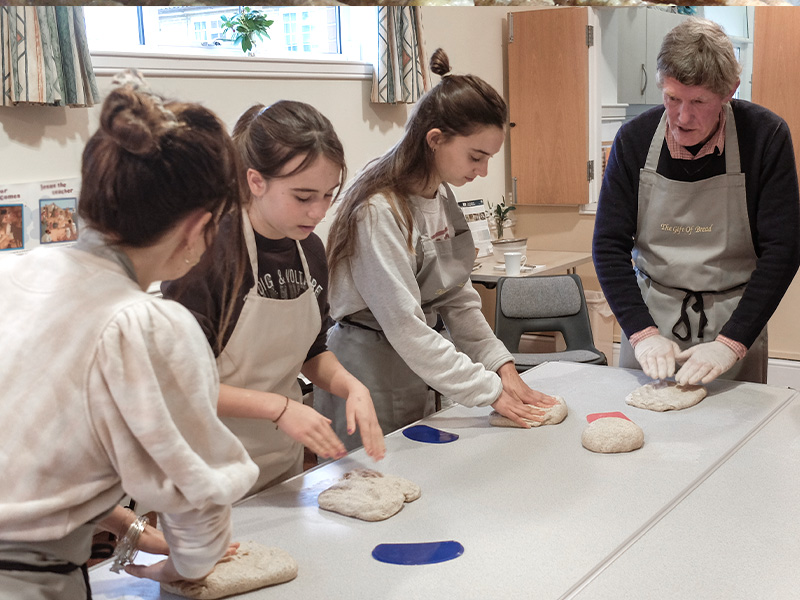
Come and taste the difference yourself
The best way to understand what makes this bread different is to make it, bake it, and eat it on the same day. That is exactly what our classes offer.